
Decompression Guide
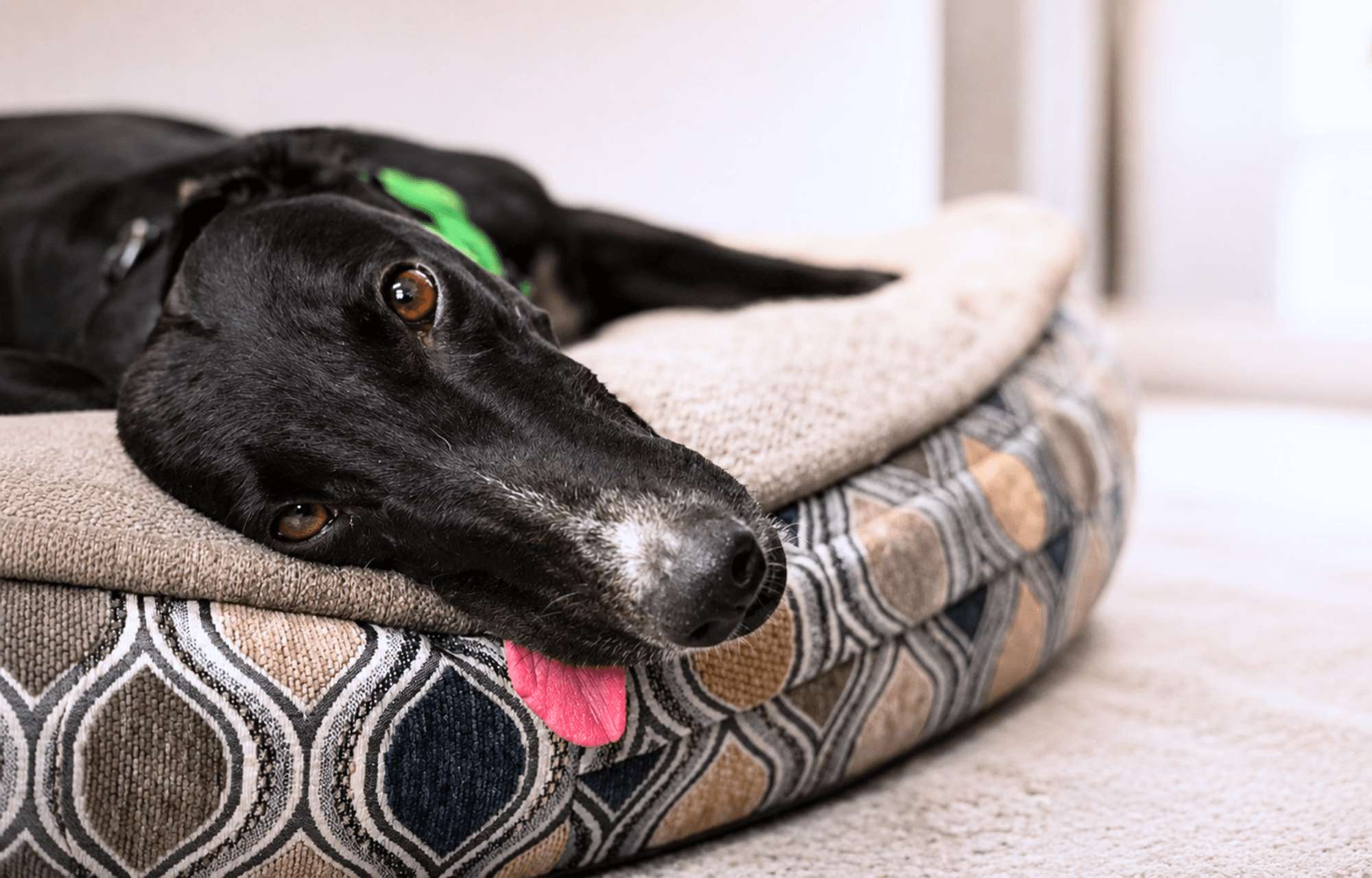
A new home can be a big adjustment. Giving your greyhound time to decompress helps them feel safe, settle calmly and build confidence.
The first six weeks are about keeping things simple, predictable and low-pressure while you learn what helps your greyhound feel comfortable. View our full guide below.
Keep their world small
For the first few weeks, less is more. Keep life calm, quiet and predictable while your greyhound adjusts to their new environment.
For the first few weeks, avoid:
Busy outings
Dog parks
Crowded environments
Excessive visitors
Long adventures
Constant stimulation
Over-handling
“Testing” them socially

Instead, focus on:
Predictable routines
Rest and recovery
Quiet environments
Observation
Gentle guidance
Emotional safety

The daily essentials
These simple foundations help your greyhound feel safe and supported every day.
Sleep & Recovery
Provide uninterrupted rest periods, access to a quiet sleeping space and time to settle without repeatedly waking or disturbing them.
Calm Activities
Offer calm, natural behaviours daily such as sniffing walks, lick mats, scatter feeding, chewing, quiet yard exploration and resting beside you.
Observation
In the first few weeks, focus less on training and more on body language, learning preferences, identifying triggers and how they recover from events.
The goal isn’t perfection or obedience. It’s safety, predictability, recovery, trust and long-term adjustment.
The six-week journey
A gentle step-by-step guide to help your greyhound settle and thrive.
-
Allow them to settle. Keep the home quiet, establish routines, minimise visitors and observe sleep, appetite and toileting.
-
Build confidence through repetition. Use familiar walking routes and introduce low-pressure activities like name recognition and relaxing on a bed or mat.
-
Carefully expand their world with short, calm experiences and watch how well they recover afterwards.
-
Allow them to settle. Keep the home quiet, establish routines, minimise visitors and observe sleep, appetite and toileting.
-
Build confidence through repetition. Use familiar walking routes and introduce low-pressure activities like name recognition and relaxing on a bed or mat.
-
Carefully expand their world with short, calm experiences and watch how well they recover afterwards.
-
Increase coping ability without overwhelming them. Maintain routine, encourage decompression activities and monitor comfort, movement and sleep.
-
Introduce manageable social experiences while protecting recovery time. Reduce exposure if behaviour deteriorates and increase rest.
-
Review what your greyhound has shown you. Consider what helps them relax, what remains difficult and how their confidence and recovery have improved.
-
Increase coping ability without overwhelming them. Maintain routine, encourage decompression activities and monitor comfort, movement and sleep.
-
Introduce manageable social experiences while protecting recovery time. Reduce exposure if behaviour deteriorates and increase rest.
-
Review what your greyhound has shown you. Consider what helps them relax, what remains difficult and how their confidence and recovery have improved.
When to slow things down
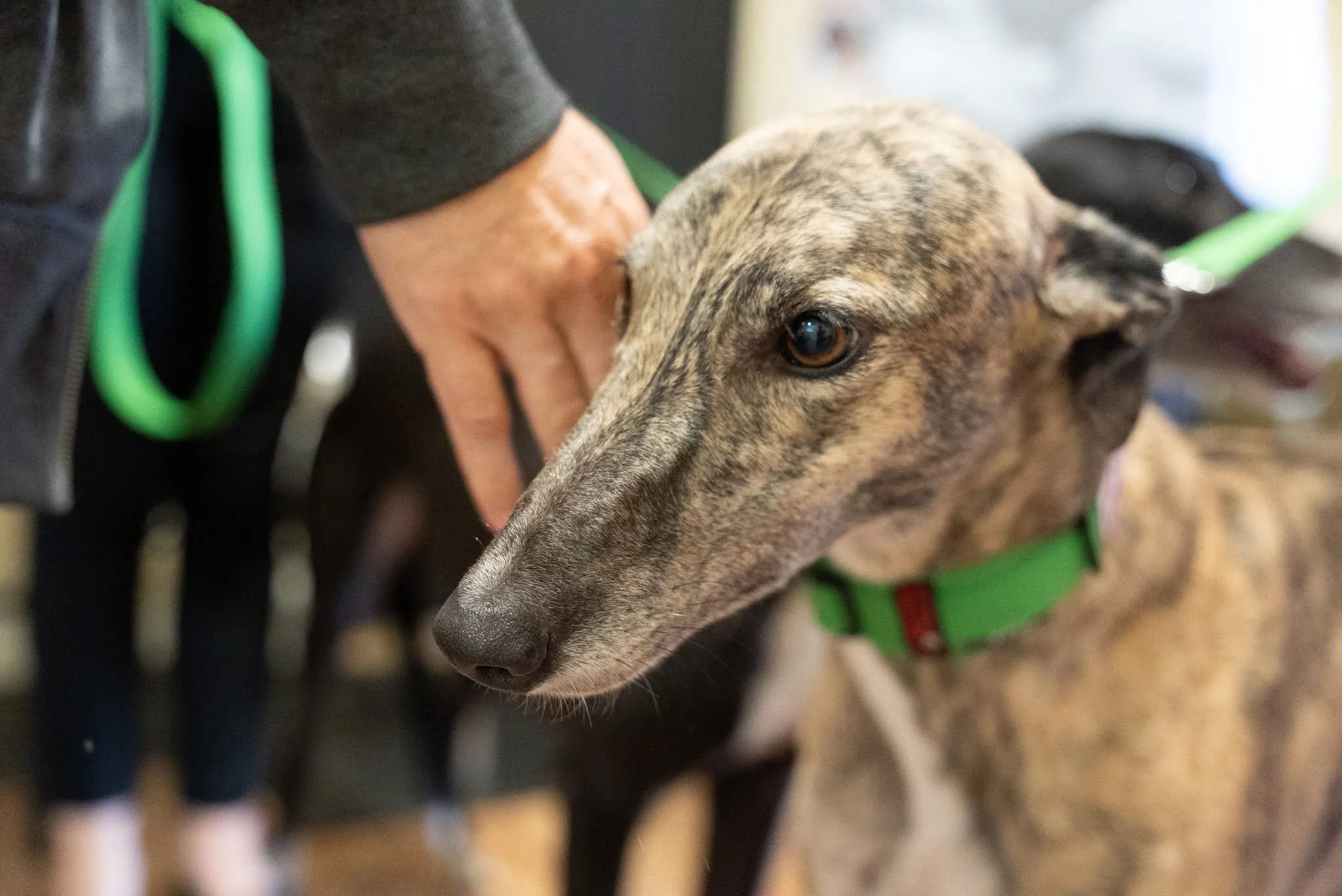
If your greyhound is struggling to settle after an experience or showing any of these signs, their world may have become too big too quickly.
Startle responses
Increased reactivity
Reduced appetite
Toileting changes
Difficulty settling or sleeping
Pacing
Panting
Vocalising
Hypervigilance
Shutting down
If in doubt, simplify.
Reduce exposure, return to a familiar routine and give them more time to rest and recover.
Need support while your greyhound settles in?
Every greyhound adjusts differently. If you’re unsure about their behaviour, stress levels or progress, our team is here to help.