
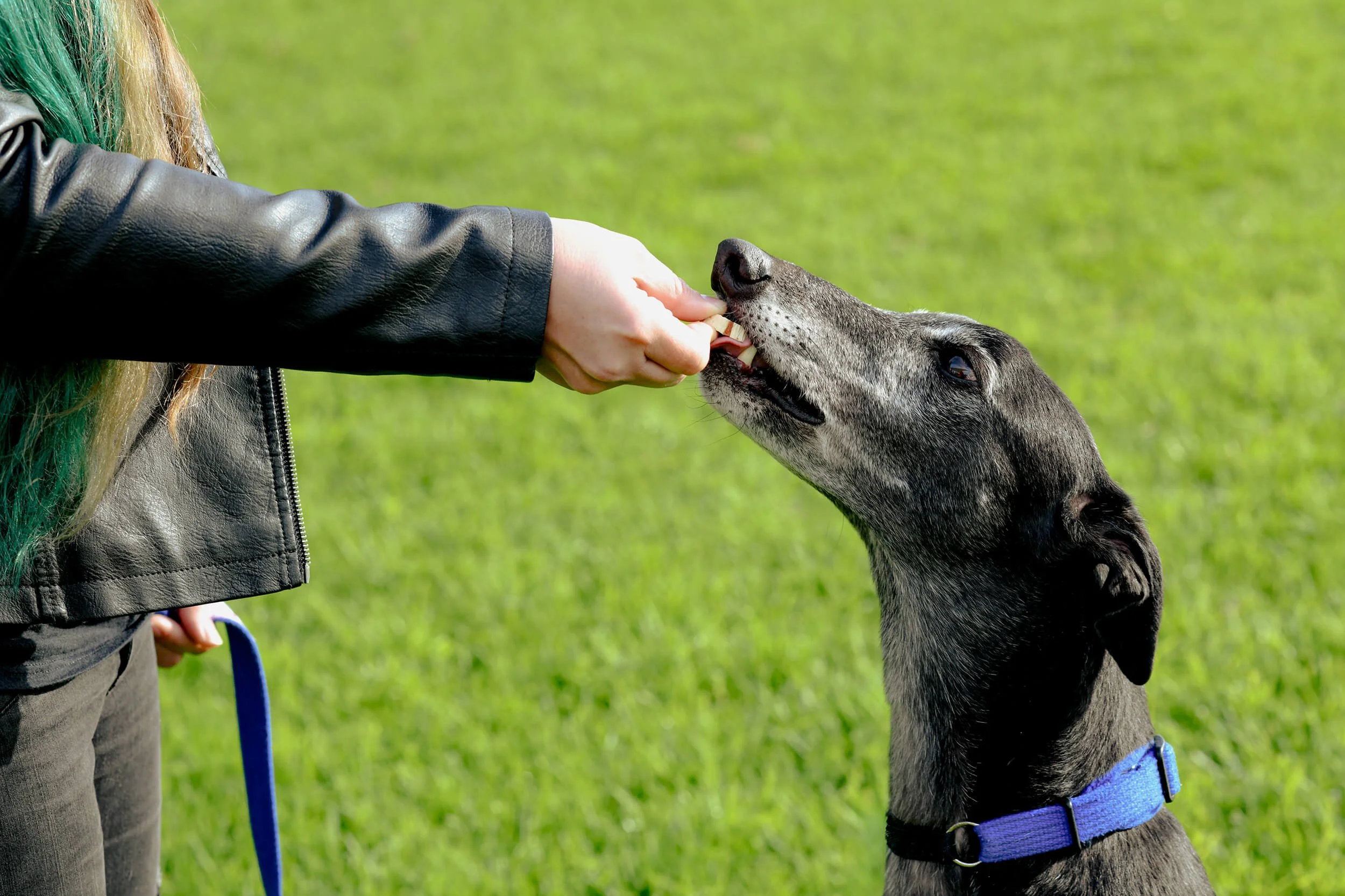
Feeding Guide
A balanced diet supports your greyhound's health, energy and wellbeing as they settle into home life.
When you collect your greyhound, we’ll provide an initial supply of food to help with the transition, along with detailed, personalised feeding information specific to your greyhound, including what they’re currently eating, how much to feed and any individual dietary needs or considerations.
Feed twice daily using a raised bowl, at least 20–30 cm off the ground.
Fresh water should be available for your greyhound at all times.
Always feed your greyhound separately from other pets and animals.
Greyhounds are susceptible to bloat and to reduce the risk, please DO NOT walk your greyhound 30 minutes BEFORE and AFTER meals.
Feeding fundamentals
What to feed
A balanced diet should include a complete dry kibble alongside an appropriate wet meat option
Dry Kibble
When you collect your greyhound, we’ll provide an initial supply of the dry kibble they’ve been eating in the kennels to help maintain consistency as they settle into their new home.
When choosing an ongoing food, look for a premium dry food containing around 26% protein and at least 15% fat, with meat listed as the first ingredient. Some greyhounds may also find dry food easier to eat when softened with a little warm water.
Avoid low-quality tinned foods and supermarket brands containing excessive fillers or large grains, as these may contribute to unwanted weight gain.
+
Wet Meat
A beef and vegetable mix is generally recommended, although turkey, kangaroo and chicken can also be offered. Meat may be diced or minced and sourced from a butcher, supermarket, pet store or reputable online supplier. Human-grade meat is also suitable.
Chicken can be higher in fat than other meat choices and should always be stored and handled carefully to reduce the risk of bacteria such as salmonella.
How much to feed
Your greyhound’s nutritional needs may vary depending on their age, health, activity level and body condition.
When you adopt or foster your greyhound, we’ll provide a detailed, personalised feeding guide specific to their individual needs.
Foods to avoid
Some foods cause severe or life-threatening reactions. If your greyhound eats something potentially toxic, contact your vet or emergency clinic immediately.
Citrus
Alcohol
Salty foods
Raw bread dough
Rhubarb
Mushrooms
Cooked bones
Chocolate
Xylitol
Grapes
Sultanas
Apple seeds
Apricot pits
Cherry pits
Onion
Avocado
Chives
Garlic
Macadamia nuts
Raw potatoes
Tomato plants
Need feeding advice?
Every greyhound is different. Their diet may need to change with age, activity and health. Contact us or speak with your vet if you have concerns about diet, weight or body condition.